FIELD MARSHAL SAM MANEKSHAW NEWS: After tragic and provocative events like Pahalgam attack, many times in India, the question arises that why is not a rigorous decision on time? Why is our response delayed? In this context, we get to learn a lot from the life and leadership of Field Marshal Sam Manekshaw. Manekshaw was not only a military strategist, but was a personality who understood the art of decision making on the basis of time, situation and morality. Based on their teachings, let’s know why a person hesitates to make decisions and how we should take inspiration from it.
Due to delay in decision making: Manekshaw believed that the biggest reason for not taking decisions is fear. This fear can be in many forms:
Fear of result: After the attack like Pahalgam, any decision – it can lead to military action or diplomatic steps – big results. A wrong step may increase war, economic crisis or international pressure. This fear stops the decision makers.
Uncertainty: Before the 1971 war, Manekshaw had advised the then government that it is necessary to wait for the right time for military action. When he was asked to start a war in April 1971, he clearly refused, as the army was not ready. This uncertainty – whether we are fully prepared? – It causes to avoid evil.
Responsibility burden: A decision -making person knows that his decision can affect the lives of millions. Manekshaw always took this responsibility seriously, but did not let it dominate himself.
Social and political pressure: Public anger is natural after attacks like Pahalgam. But leaders at times focus on long -term strategy rather than immediate popularity, which may delay quick action.
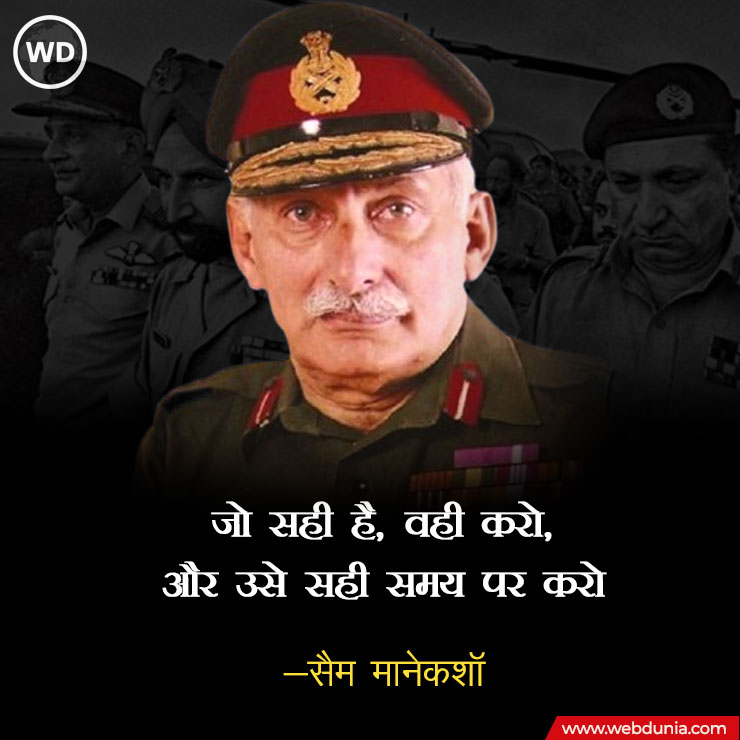
Inspiration from Manekshaw: Time, Courage and Strategy: Field Marshal Manekshaw’s life teaches us that delay in decision making can be a part of strategic thinking, not weakness, provided it is in the right direction. His strategy in the 1971 war is a living example of this. When it came to India-Pakistan war, Manekshaw did not take any hurry. He analyzed the army preparations, weather conditions and international environment. This was his patience and courage that gave India a historic victory.
This view of Manekshaw inspires us:
Wait for the right time: Every action has a right time. The response immediately after an attack like Pahalgam may seem emotionally perfect, but it is not always appropriate.
Show courage: Manekshaw had clearly stated the government that it would not take the risk of starting the war at the wrong time. This courage teaches us that the right decision should not bend in front of pressure.
Emphasis on preparation: Manekshaw spent months to prepare the army. This teaches us that the decision taken without preparation can invite failure.
Crisis like Pahalgam attacks challenge us, but Manekshaw’s teachings show us the way. We need:
Control of emotions: Anger and sorrow are natural, but decisions should be based on logic and strategy.
Solidarity: Manekshaw always emphasized solidarity between the army and the government. Today we also need solidarity between the public, the army and the government.
Long -term thinking: Such strategy is more important than immediate action that prevent such incidents in future. Field Marshal Sam Manekshaw taught us that the true leader is the one who takes the right decision at the right time despite fear, uncertainty and pressure. After attacks like Pahalgam, we should avoid hurry to react immediately and proceed with patience, courage and strategy like Manekshaw. This will not only increase our strength, but will also lead us to a strong and safe future.